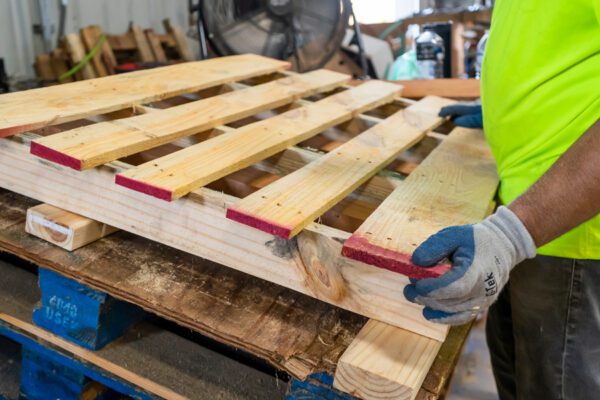
Pallet manufacturing is a fast-moving, margin-focused business that revolves around two key concerns for insurers: combustible materials and the quality of operations management. If you’re a CEO running a pallet company—especially if you have on-site lumber processing, repair work, or large warehouse and yard storage—it’s clear the insurance market is changing. Carriers are looking closely at how you actually run your business, not just what industry code you’re in.
This means two pallet manufacturers with similar revenue and equipment can end up with very different insurance pricing, deductibles, terms, and capacity. The difference often comes down to things like housekeeping, dust control, how idle pallets are stored, maintenance records, and whether property values and business interruption coverage are up to date.
This article breaks down insurance trends affecting wood products and pallet manufacturing, explains the fire risks associated with idle pallet storage (per NFPA guidance), and highlights practical changes that tend to improve insurance outcomes.
Why the Insurance Market Is Tightening for Pallet Manufacturers and Wood Product Companies
Insurance carriers have become more disciplined on wood-related risks for good reason. Operations tied to sawmills, hardwood processing, lumber handling, and pallet manufacturing often combine:
- High fire load (wood pallets, plastic pallets, wood dust, packaging)
- Combustible dust exposure (cutting, trimming, grinding, repair areas)
- High-value specialized equipment (nailers, saw lines, conveyors, forklifts, kilns, sorters)
- Production dependencies (single points of failure that drive extended downtime)
- Fluctuating inventory values (seasonality, customer demand spikes, yard accumulation)
The result is increased underwriting scrutiny. Carriers are evaluating how your facility actually operates day to day—and they increasingly expect formal programs, records, and proof.
CEO takeaway: Insurance isn’t just a back-office task anymore—it’s a reflection of how well your company runs. Underwriters aren’t making guesses; they’re looking for proof.
Idle Pallet Storage Fire Risk: A CEO-Level Exposure Hiding in Plain Sight
Idle pallets are essential to the supply chain, but when they’re not moving, they can become a major fire hazard—particularly when stored incorrectly.
Key risk factors include:
- Combustibility: Most pallets are wood or plastic, both combustible.
- Sprinkler effectiveness: High stacks can prevent water from reaching the seat of the fire—especially the bottom of the stack, where more water may be required.
- Chimney/flue effect: Stacked wood pallets can act like a chimney, accelerating fire spread vertically and across storage arrays.
The National Fire Protection Association (NFPA) provides guidance relevant to idle pallet storage, including:
- NFPA 1: Fire Code
- NFPA 13: Standard for the Installation of Sprinkler Systems
CEO takeaway: How you store pallets can make a big difference when it comes to fire losses—and can determine if sprinklers work as intended. Even storage in a yard or warehouse corner can lead to your company’s biggest property claim.
Material posted on this website is for informational purposes only and does not constitute a legal opinion or medical advice. Contact your legal representative or medical professional for information specific to your legal or medical needs.